

Why 9 in 10 victims stay silent about anti-social behaviour
Introduction
Resolve’s 2025 YouGov survey revealed a stark reality: 56% of victims and witnesses of anti-social behaviour (ASB) did not report it to any agency (with a subsequent increase to 63% in their 2026 YouGov survey results). This statistic raised a critical question for us: Why?
To find the answer, we launched a survey to look beyond the numbers. By engaging directly with victims and witnesses about their personal experiences of staying silent, we aimed to uncover the factors that influence the non-reporting of ASB.
This blog details our findings, shedding light on why so many feel unable or unwilling to come forward and exploring how we can bridge the gap between experiencing ASB and seeking help.
Key findings
89%
of respondents had experienced ASB that they did not report.
72%
said the unreported behaviour was very serious and significantly affecting their life.
53%
cited a belief that nothing would be done as a major factor in not reporting.
80%
said the ASB got worse during the period they did not report.
84%
said knowing agencies would take the report seriously would have made them more likely to come forward.
67%
of respondents identified as having a disability or long-term health condition.
Who responded to our survey
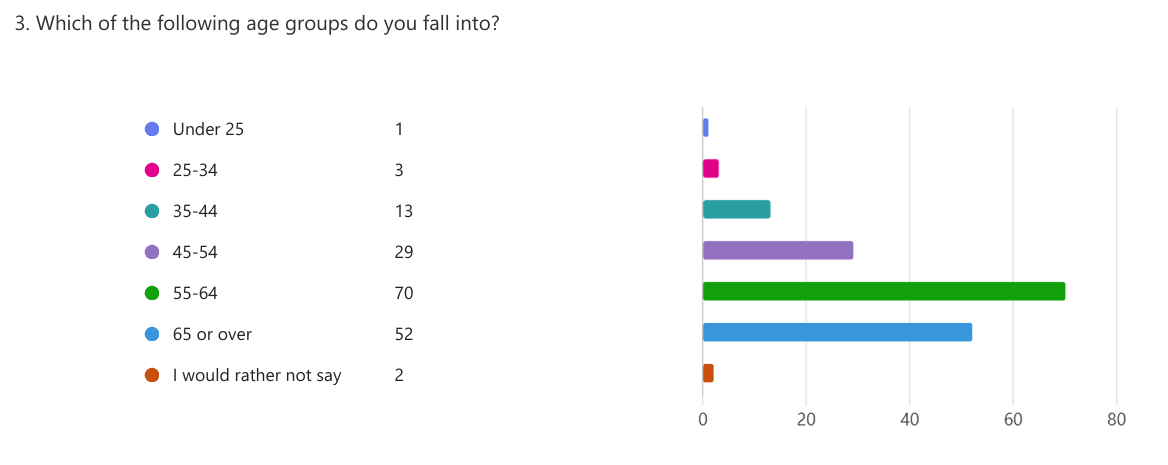
The survey received 171 responses from victims and witnesses of anti-social behaviour. The majority of respondents were aged 45 and over, with the largest groups falling in the 55–64 (70 respondents) and 65 or over (52 respondents) age brackets.
Notably, 114 respondents (representing 67% of those who answered) identified as having a disability or long-term health condition, reflecting the disproportionate impact of ASB on vulnerable people. Respondents were broadly spread across urban (79), suburban (54), and rural (34) settings.
Most victims did not report – and most experienced ASB repeatedly
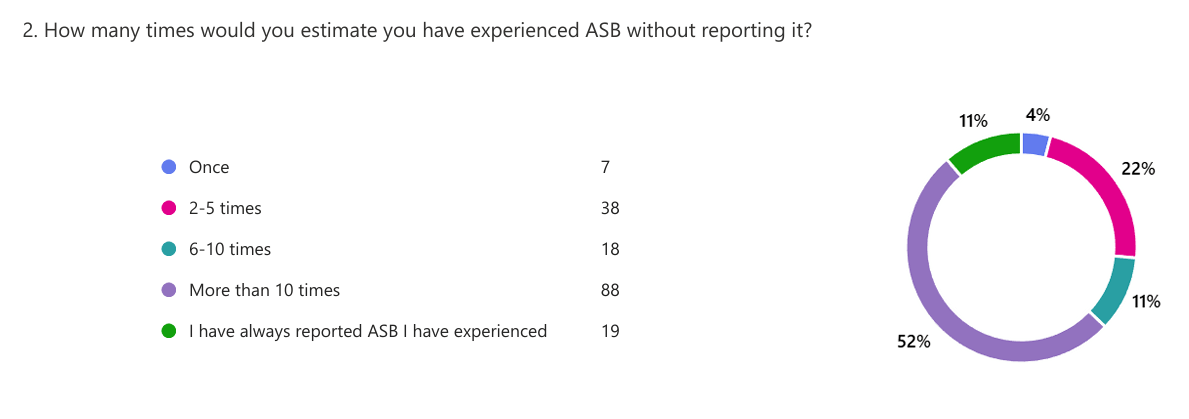
89% of respondents said they had experienced ASB but did not report to any agency. Of those, the vast majority were not dealing with a one-off incident – 52% had experienced unreported ASB more than ten times, and a further 22% between two and five times. This is not a picture of people dismissing minor, isolated incidents. It is a picture of people enduring persistent, repeated behaviour and choosing, for a range of deeply understandable reasons, not to come forward.
The anti-social behaviour was serious – but victims still did not report
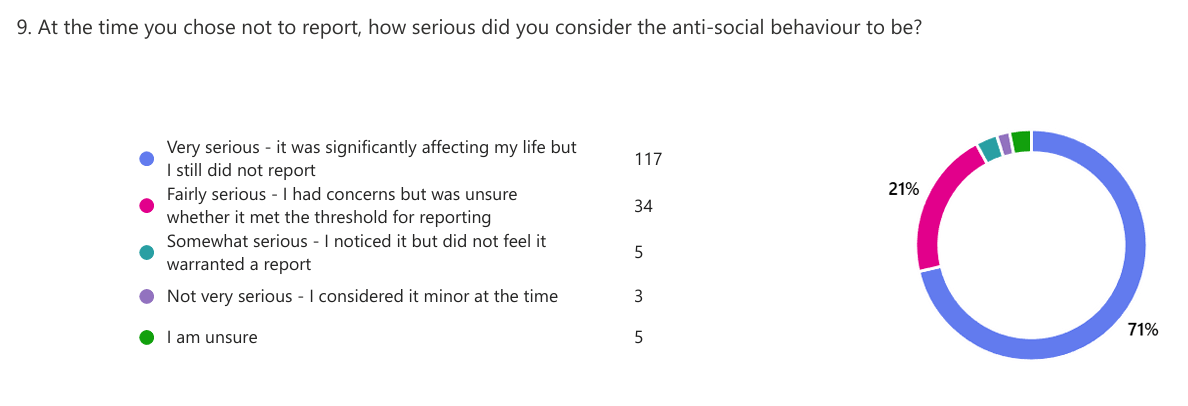
72% of respondents said they considered the ASB very serious at the time they chose not to report – meaning it was significantly affecting their life. A further 21% described it as fairly serious. Silence, in other words, is not a reflection of severity. It is a reflection of a system that victims do not trust to help them.
Why victims stayed silent
The single most influential reason for not reporting was a belief that nothing would be done – cited as a major factor by 53.3% of respondents. This finding demonstrates that the primary barrier to reporting is not practical, it is experiential. Victims have either learned from previous contact with agencies that reporting leads nowhere, or they have heard enough from others to believe it. The open-text responses reinforce this powerfully – respondents described reporting every single incident and seeing nothing change, and others described perpetrators successfully manipulating the situation to present themselves as the victim.
“I’ve reported multiple times, but nothing ever gets done, agencies can’t be bothered to follow it up and care nothing for my well-being.”
Other commonly cited factors included fear that the situation would get worse if reported, not wanting to be identified as the complainant, concerns about personal safety, and a lack of trust in agencies following a previous bad experience.
The cost of not reporting
The decision not to report did not protect victims’ wellbeing – it compounded it. 79 respondents said they felt anxious or stressed about whether the behaviour would escalate. 75 felt isolated and alone. 73 felt helpless or powerless. Only one respondent said they felt relieved by their decision not to report.
Crucially, 80% of respondents said the ASB got worse during the period in which they did not report it – with 110 saying it got significantly worse. Not a single respondent said the behaviour improved or stopped on its own.
This is unambiguous evidence that silence does not make ASB go away. It makes it worse.
Interestingly, when asked whether they wished they had reported at the time, the responses were telling. The largest group – 31% of respondents – said they regret not reporting the ASB. A further 30% said they regret not reporting but understood why they had not at the time.
What would have made a difference?
The most significant factor that would have made victims more likely to report was knowing that agencies would take the report seriously – cited by 142 respondents, representing 84% of those who answered this question. This dwarfs every other factor and sends an unambiguous message to agencies:
The single most impactful thing you can do to increase reporting is to demonstrate, consistently and credibly, that reports will be acted upon.
Other significant factors included knowing that there was something agencies could actually do to help (96 respondents), knowing what would happen after making a report (82 respondents), having a trusted advocate to report on their behalf (72 respondents), and greater confidence that reporting would not make the situation worse (70 respondents).
Conclusion
What this research tells us, above all, is that victims of anti-social behaviour are not making an uninformed choice when they decide not to report. They are making an informed one – based on past experience, on what they have seen happen to others, and on a justified fear that coming forward will change nothing, or worse, make their situation harder.
That should give us all pause. Every percentage point in this data represents a real person who endured persistent, often serious harm, because the system had not yet earned their trust.
The encouraging part of this research is that the solution victims are asking for is not complicated. They want to know that when they report ASB, someone will actually do something about it. Delivering that consistently, every time, for every victim, regardless of where they live or who they report to, is the single most powerful action agencies can take to close the reporting gap – and to make sure no victim has to face anti-social behaviour without support ever again.
To consider
It is worth noting that the findings of this survey are likely influenced by the nature of our audience. Victims rarely find ASB Help at the very first moment they experience anti-social behaviour – by the time they reach us, many have a history of reporting and a history of inadequate agency responses. The strength of feeling reflected in this data, particularly around a belief that nothing will be done, may therefore reflect those accumulated experiences as much as it reflects a single decision not to report.
This does not diminish the findings, but it is worth bearing in mind when interpreting them – and it underlines the importance of future research drawing on a broader sample of victims, including those who have had more positive experiences of the reporting process.


The Crime and Policing Act 2026 is now law: Here's what it means for ASB
Introduction
The Crime and Policing Bill received Royal Assent on 29 April 2026 and is now the Crime and Policing Act 2026 – and for those of us working with victims of anti-social behaviour (ASB), it marks a significant moment.
The Act forms a central part of the Government’s response to anti-social behaviour and is intended to equip the police and partner agencies with a strengthened suite of powers.
At ASB Help, we have been following the progress of this legislation closely, and we know that many of the people we work with – victims, practitioners, and partner organisations alike – want to understand what has actually been confirmed in the final document. Because when it comes to legislation, what is promised during a Bill’s passage through Parliament does not always reflect what is in the final version.
So, this blog sets out what has been set in stone in relation to ASB and what it means for victims and the agencies that support them.
Please note: No commencement date has been announced, so whilst these powers have been enacted – they cannot be used yet.
Respect Orders
Respect Orders have been a long-anticipated introduction. They are a new civil court order that partially replaces the existing civil injunction (ASBI) for adults aged 18 and over.
What has changed:
- The Respect Order is a new civil behavioural order that enables courts to ban adult offenders from engaging in specified activities relating to their ASB.
- Breach of a Respect Order is a criminal offence, meaning the police can enforce suspected breaches via arrest.
- The Respect Order can also contain positive requirements, which can compel perpetrators to take action to address the root cause of their behaviour.
- Orders can prohibit behaviour and/or require the perpetrator to take positive action – such as attending a programme to address the underlying causes of their conduct.
- Applications can be made by a wide range of relevant authorities including local authorities, housing providers, and the police.
- In cases involving violence or significant risk of harm, a perpetrator can be excluded from their own home by court order.
- Respect Orders will be piloted to ensure that they are as effective as possible before national roll-out.
What this means for victims:
The most significant change here is the power of arrest on breach. Under the old civil injunction, a perpetrator who ignored a court order could not be immediately arrested – agencies had to return to court to seek enforcement, a process that could take weeks. For a victim experiencing persistent ASB, those weeks could feel like a lifetime. The Respect Order changes this fundamentally. If a perpetrator breaches the conditions of their order, the police can arrest them on the spot. The addition of positive requirements is also significant – it means the court can address not just what a perpetrator is doing, but why, which increases the chances of lasting behaviour change rather than temporary compliance.
Youth Injunction
While the Respect Order replaces the civil injunction for adults, a separate route is retained for young people, now formally called the Youth Injunction.
What has changed:
- The Act confines the power to grant injunctions under section 1 of the 2014 Act to persons aged 10 or over but under 18.
- Youth Injunction applications must be made to the Youth Court, reflecting the different legal and welfare considerations that apply to young people.
- Applicants for Youth Injunctions will be required to complete a risk assessment prior to application, which will include an assessment of both the victim’s and the respondent’s contextual vulnerabilities.
- Breach is not automatically a criminal offence – a power of arrest can only be attached where violence or significant risk of harm is present.
- The Youth Court approach prioritises rehabilitation and welfare alongside accountability.
What this means for victims:
The introduction of a mandatory risk assessment before a Youth Injunction application is made is an important improvement for victims. It means that agencies cannot simply pursue an order without first considering the vulnerability of the victim and the wider context of the behaviour.
For victims experiencing ASB from young people – which can be just as frightening and distressing as that from adults – this ensures their situation is properly assessed before formal action is taken, reducing the risk of cases being dismissed or minimised at the earliest stage. The retention of a youth-specific route also means that the welfare-focused approach to under 18s is preserved, which can lead to more sustainable behaviour change over time.
Housing Injunction
The Housing Injunction is drawn from the existing civil injunction framework but is now given its own distinct identity under the Act, applying specifically to ASB connected to housing.
What has changed:
- The Housing Injunction is now a named, distinct order specifically for housing-related ASB.
- It applies to adults aged 18 and over where the behaviour is connected to housing, for example, a tenant whose conduct is affecting neighbours or communal areas.
- It operates at a lower threshold than the Respect Order – covering nuisance or annoyance rather than the higher bar of harassment, alarm or distress.
- Housing providers can apply directly, without necessarily needing police involvement.
- A court dealing with a Housing Injunction application is able to grant a Respect Order instead if it deems it more appropriate – for example where the conduct meets the higher threshold of harassment, alarm or distress.
What this means for victims:
The Housing Injunction’s lower threshold is particularly important for victims who have been told their situation does not meet the bar for formal action. Nuisance and annoyance – the kinds of persistent, grinding behaviour that makes daily life miserable without necessarily ticking every box of a formal harassment definition – can now be addressed through a dedicated legal route. The fact that housing providers can apply directly also removes a common barrier: victims who have repeatedly reported to their housing officer but been told the police need to be involved first will no longer face that obstacle. Housing providers now have their own direct route to court.
Dispersal Powers
Dispersal powers allow the police to direct a person causing or likely to cause ASB to leave a specified area and not return for a set period.
What has changed:
- The maximum exclusion period for dispersal directions has been extended from 48 hours to 72 hours, with a mandatory review at 48 hours.
- This extension allows dispersal directions to apply over longer periods such as weekends and bank holidays, providing crucial respite to those affected by ASB.
What this means for victims:
This is a targeted but meaningful change. Under the old rules, a dispersal direction lasting 48 hours issued on a Friday afternoon would expire by Sunday morning – leaving victims exposed to the return of the perpetrator over the remainder of the weekend, when other agencies and services are often less available. The 72-hour extension addresses this directly, ensuring that respite for victims is not cut short simply because the behaviour happened to escalate at the start of a bank holiday weekend. The mandatory 48-hour review also provides a safeguard, ensuring the continued use of the direction is actively considered rather than simply running its course unchecked.
Fixed penalty charges
Fixed Penalty Notices (FPNs) are issued for breaches of Community Protection Notices (CPNs) and Public Spaces Protection Orders (PSPOs).
What has changed:
- The upper limit for a fixed penalty notice for breaches of a Public Spaces Protection Order or a Community Protection Notice has been increased from £100 to £500.
- The Act also extends the powers available under the Community Safety Accreditation Scheme (CSAS) to allow CSAS officers to issue fixed penalty notices for breach of CPNs and PSPOs.
- A new duty on the Home Secretary to issue guidance on the proportionate use of FPNs to address concerns about their misuse, particularly by external contractors.
What this means for victims:
A £100 fine was widely regarded as insufficient to deter persistent perpetrators – particularly those who had learned that the likelihood of enforcement was low. Increasing the upper limit to £500 sends a clearer message that breaching a community protection notice has real financial consequences. Equally important is the extension of issuing powers to CSAS officers, which means more frontline professionals can take action without waiting for police availability – a practical improvement for victims in areas where policing capacity is stretched.
Closure Powers
Closure powers allow agencies to quickly close premises that are causing or being used to cause nuisance or disorder.
What has changed:
- The timeframe for agencies to apply to a Magistrates’ Court for a closure order has been extended from 48 hours to 72 hours after service of a closure notice.
- The power to issue closure notices has been extended to registered social housing providers.
- Housing providers can now authorise 48-hour closure notices through a senior management team member without needing police or local authority involvement.
What this means for victims:
This is a significant practical improvement for victims living in social housing – which is where many of the ASB cases we encounter occur. Previously, a housing association that identified a property being used to cause serious nuisance had to wait for police or council involvement before any formal closure action could begin. That delay could mean days or weeks of continued harm for victims in the surrounding area. Housing providers can now act directly and swiftly, and the extended 72-hour window gives agencies more breathing room to prepare a robust closure order application without the victim being left unprotected in the interim.
Seizure of motor vehicles
The police have existing powers to seize vehicles being used anti-socially – including off-road bikes and vehicles involved in illegal racing or aggressive driving.
What has changed:
- The requirement for a police officer to issue a warning before seizing a motor vehicle being used to cause ASB has been removed.
- Police can now immediately seize vehicles being used in an anti-social manner without first needing to warn the individual.
- This applies to a wide range of vehicle-related ASB including off-road bike misuse, illegal racing, and aggressive or inconsiderate driving.
What this means for victims:
The previous requirement to warn a perpetrator before seizing their vehicle was widely criticised as giving offenders an opportunity to simply drive away and return later. Removing the warning requirement means police can act immediately and decisively when they witness ASB being committed using a vehicle – providing faster relief for victims in communities that are being plagued by this type of behaviour.
ASB Case Review – PCC oversight and Local Policing Body (LPB) Reviews
The ASB Case Review – the legal right that allows victims of persistent ASB to demand a multi-agency review of their case – has been strengthened by the Act in two important ways.
What has changed:
- A new duty has been created for Police and Crime Commissioners (PCCs) to promote awareness of the ASB Case Review in their police force area and provide a route for victims to query decisions via their office.
- A new Local Policing Body (LPB) Review mechanism has been introduced, sitting above the ASB Case Review as a formal escalation route.
- A person can request an LPB Review where either they applied for an ASB Case Review, but it was determined that the threshold was not met, or the person is dissatisfied with the way an ASB Case Review was carried out.
- PCCs are required to consult relevant agencies, including housing providers, when establishing LPB Review procedures.
What this means for victims:
The ASB Case Review has always been a powerful tool in theory, but in practice its implementation has been inconsistent in some areas. The new PCC duty to promote awareness addresses one of the most fundamental problems: many victims simply do not know the ASB Case Review exists. The LPB Review goes further still, giving victims who have been refused a Case Review – or who have been through one and found it inadequate – a formal, statutory escalation route for the first time.
Conclusion
It’s important to note, whilst the Crime and Policing Act 2026 has now received Royal Assent, many of its provisions, including the Respect Order, are not yet in force. The existing powers under the 2014 Act remain in place until the new provisions are commenced.
We will continue to liaise with victims and practitioners across England and Wales as these powers come into effect, monitoring their effectiveness. As with any change to legislation, we remain hopeful that they will result in positive outcomes for victims of anti-social behaviour.
Find the Crime and Policing Act 2026 factsheet here.
UPDATE: The Home Office has announced these new powers, including Respect Orders, will come into force on 26th October 2026.
Is your team ready?
The introduction of new anti-social behaviour powers presents an important opportunity to improve outcomes for victims and communities. However, successful implementation depends on practitioners understanding the changes and having the confidence to apply them appropriately and consistently.
At ASB Help, we support organisations to build that confidence through practical, specialist training delivered by experienced professionals. Whether online or face-to-face, our training helps teams understand the new powers and embed best practice from day one.
Interested? Get in touch! We’d be delighted to help your team prepare for the changes ahead.

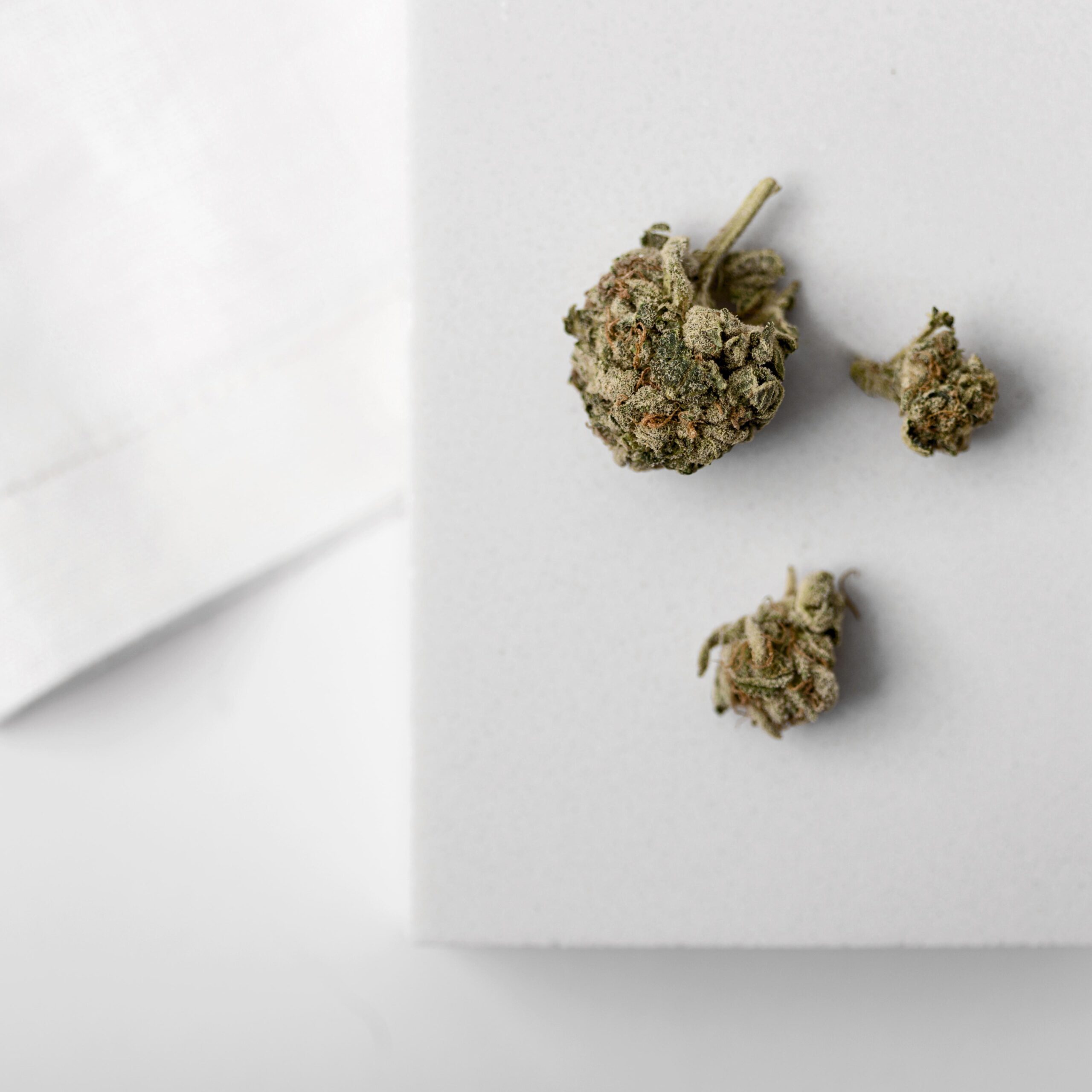
Balancing rights: Prescribed cannabis in anti-social behaviour cases
Introduction
Approximately 50,000 – 60,000 people in the UK are estimated to have a prescription for medicinal cannabis, a number that has continued to grow since the introduction of legislation allowing Cannabis-Based Products for Medicinal use in Humans (CBPMs) under the Misuse of Drugs Regulations 2001 that was amended in 2018. While this change has enabled patients with certain medical conditions to access treatment that may significantly improve their quality of life, it has also introduced new complexities for practitioners responding to reports of anti-social behaviour (ASB).
In particular, practitioners are increasingly encountering cases where neighbours report strong, persistent cannabis fumes entering their homes from a property where the occupant holds a prescription for medical cannabis. These situations can be difficult to navigate. Practitioners may need to determine whether the cannabis is being used in line with the prescription (typically through vaporisation) or whether it is being smoked, which is not how prescribed cannabis is intended to be consumed. In some cases, there may also be concerns that illicit cannabis is being used alongside the prescription as a “top-up.”
Establishing this distinction can be challenging in practice, creating uncertainty around what enforcement options may be appropriate and what evidence is required. To help explore these complexities, we have spoken with experts in the field to provide our readers with some useful insight and approaches to manoeuvring these complex cases as practitioners.
Copyright @ Freepik
Understanding prescribed cannabis
But first, we need to understand medical cannabis.
It’s important to know – smoking cannabis is illegal, regardless of prescription.
Medical cannabis is classified as a Controlled Drug and can be prescribed in multiple forms, including:
- Flower/bud (for use with herbal vaporisers)
- Oil
- Capsule
- Vape cartridge/disposable pen
We find that complexities with evidencing illegal use comes from cases where the prescribed cannabis is in flower/bud form. So, it’s important to understand flower/bud prescriptions in more detail.
Unlike vaping as we might know it, herbal vaporisers work by using a non-combustible method of administration. This method minimises the release of potentially harmful by-product, and perhaps more interestingly in this case, it significantly reduces any potential lingering smell. The smell produced by herbal vaporisers tends to be closer to the raw, ‘herby’ smell of the cannabis plant, rather than smoking cannabis which produces the distinct ‘skunky’ smell we might be used to. So, if a very potent cannabis smell is coming from an adjoining property – this may indicate illegal use.
Copyright @ Releaf UK
It’s also important to note that whilst the smell of cannabis can be unpleasant, unless you are in an unventilated room with direct exposure to the smoke, you are unlikely to experience any health complications as a direct result.
Likewise, cannabis vapour (from vapour devices) has been shown to have little to no impact on nearby individuals. A 2018 study on second-hand exposure of hospital staff administering vaporised cannabinoids found no detection of cannabinoids in staff blood levels.
Case study
In order to demonstrate the complexities of these cases, we wanted to share a real practitioner case study with you. We are grateful to have had a chat with Paula Williams regarding one of her previous cases in Plymouth involving medical cannabis:
Overview of the case
In this case, a victim was reporting a very strong cannabis smell coming from their neighbour’s property. This neighbour had an active cannabis prescription, but it was theorised that the neighbour was potentially ‘topping up’ their prescription with illegal cannabis use.
Impact on the victim
As with many of these types of cases, we find the impact is wide reaching, speaking to Paula about this case she said the impact was:
“Awful because it was a two-bed property, the second bedroom was made-up as a nursery for their granddaughter so there was a cot in there. I could smell cannabis in the hallway, the minute I walked in, in the granddaughter’s room and then randomly it was also smelt by other colleagues in the kitchen. The impact on the residents was that they could not have their granddaughter in their home.”
“And not only was it affecting their relationship and ability to kind of enjoy family time, but when they were coming home from work, the minute they opened the door and smelled that, they were having to wait outside and ventilate their home. I clearly remember it was freezing at that time of year – so all their heating was flying out which was costing them.”
As with many cases of neighbour-related anti-social behaviour, we find that where a case begins with one form of ASB, it can often evolve into other types of behaviours. In this case study, the impact reached the wider community, Paula states:
“It became a street war. The reporting neighbour was highly regarded in the community, so other residents got involved and began to intimidate the alleged perpetrators family.”
What did the housing association do to address the situation?
Paula explained that local agencies such as police and environmental health were limited in how involved they could get as there was ‘no way to prove if the cannabis was being illegally smoked’. Paula states it left the housing association in a predicament:
“It felt like an impossible situation.”
When discussing what the housing association did to try and address the situation, Paula states they tried the following:
- Hired a surveyor to provide a list of recommendations for sealing/securing the neighbouring property. All recommendations were actioned by the housing association.
- Tried mediation between the neighbours but neither neighbour wanted to engage in the end.
When asked if they tried pursuing legal action, Paula states this didn’t seem appropriate:
“I think it wasn’t proportionate to enter into the legal arena with the disability of the alleged perpetrator and being unable to prove illegal use.”
Ultimately, the smell persisted. Eventually the neighbour was served a Notice of Seeking Possession (NOSP) and a management move was proposed but the alleged perpetrator was not willing to move without a financial incentive which was not offered because providing a financial incentive in these circumstances would not have been appropriate, proportionate, or morally justified. Both residents still live in their properties and no recent reports have been made regarding this issue.
How was the victim supported during this process?
We asked Paula how the housing association supported the reporter during this case, Paula states:
“Regular contact and trying to manage expectations, which is difficult when there isn’t an easy fix. But when they would call, we would go around straight away and validate what they were saying about the smell.”
What advice would you give to other housing providers who might face similar situations?
“I think you just have to follow your policies and procedures, if it’s causing an impact, explore your resolution options.”
We believe this case demonstrates the obstacles that practitioners face when addressing these complex situations regarding prescription cannabis and evidencing potential illegal use.
What can practitioners do?
In order to clarify what practitioners can do in these cases, and the relevant legislation, we linked in with the College of Policing and Jo Grimshaw, Head of Anti-social Behaviour at Surrey Police. Jo was kind enough to share Surrey’s framework for dealing with obnoxious smell cases.
First and foremost – if you are unsure about anything – link in with health providers to learn more about medical cannabis and the alleged perpetrators’ prescription in particular.
Some useful points from this framework include:
- Cannabis which has been provided via prescription may be legally vaped (not smoked). However, it can/will still produce an odour when used. In the first instance, a relevant prescription should be sought to evidence legality.
- Cannabis which is not prescribed is classified as a Class B drug under the Misuse of Drugs Act. However, a person may have a valid ‘CanCard’ due to a medical issue. This does not make the use of cannabis legal; however, it does have to be signed off by a doctor which means that the person does have a medical issue for which they are self-medicating with cannabis.
Circumstances such as the above should always be taken into consideration. Education as to the legal status of cannabis and the facts surrounding CanCard vs prescription, and signposting and advice to relevant support services should be provided wherever possible. However, the existence of a medical issue does not negate the need to deal with the smell if it is having an impact on others.
Any medical information provided while investigating the smell should be protected and the reason for the smell/odour in these circumstances cannot be shared when updating neighbours/ complainants as to the action taken unless permission has been provided by the subject.
Likewise, G&B ASB Associates have provided some insight previously on medicinal cannabis and how to address these cases.
G&B ASB Associates previously held a webinar, which brought together experts in the field, including our very own Deputy CEO, Charlie, to discuss how practitioners can address these cases. You can watch the webinar here: Prescription Cannabis & ASB Webinar – G&B ASB Associates
Copyright @ Freepik
On the back of this webinar, CP Data Protection published an article on the main points raised and discussed as part of the webinar:
Within this article, CP Data Protection touch on some important points, including:
“A cannabis user with a prescription may have a disability under the Equality Act, and as the CIC document points out, this means they have a right to “reasonable adjustments”. The adjustments may include allowing them to use a vapouriser or vape pen indoors, but – crucially – it doesn’t override their neighbours’ right to enjoy their own homes.
Even with a prescription and/or a disability, if prescribed cannabis use is causing problems for neighbours, this can be handled as anti-social behaviour.
If a tenant is causing anti-social behaviour, to the extent that their landlord wants to evict them, the burden of proof on the landlord isn’t as high as it is in a criminal case; the case is decided on the balance of probability.”
Non-legal interventions
It’s important for practitioners to know what tools they have available to them to address these cases. Below are some non-legal interventions we have seen being used to try and resolve these issues:
Mediation
Mediation can be a valuable tool where tensions have developed between neighbours as a result of persistent odours. An independent mediator can help both parties discuss the issue in a structured and neutral environment, allowing the complainant to explain the impact the fumes are having on their well-being, while giving the other resident the opportunity to explain their circumstances.
Mediation can also help establish practical compromises, such as agreeing on specific times of use, adjusting ventilation, or identifying locations within the property where the impact on neighbours is reduced.
Good Neighbour Agreements (GNA)
A Good Neighbour Agreement can be used as an informal written agreement between residents to set clear expectations around behaviour. While not legally enforceable, these agreements can be helpful in setting boundaries and demonstrating that both parties have committed to practical steps to reduce the issue.
For cases involving cannabis fumes, agreements might include steps such as:
- Ensuring adequate ventilation when using a vaporiser to help disperse vapour and reduce build-up.
- Using cannabis in private areas of the property, away from shared walls, windows, balconies or communal spaces where fumes may travel more easily.
- Taking reasonable steps to minimise odour, such as cleaning the area regularly or using air filtration systems.
- Being mindful of times of use, particularly late at night when neighbours may be trying to sleep.
These agreements can provide a constructive starting point and demonstrate willingness to resolve the issue.
Community Protection Warnings (CPW)
Although a Community Protection Warning is a formal step within the anti-social behaviour framework, it is often used as a preventative tool before legal enforcement. A CPW allows practitioners to clearly set out the concerns raised and the behaviour that needs to change.
In cases involving cannabis fumes, a CPW could outline expectations such as ensuring the substance is used in accordance with the prescription (for example, vaporised rather than smoked) and taking reasonable steps to prevent fumes from affecting neighbouring properties.
In some areas, the standard CPW is adapted into an ‘official warning letter’, setting out the concerns and advising that a Community Protection Notice (CPN) may be issued if the behaviour continues. If the behaviour persists, a CPN is then issued with either prohibitive or positive requirements.
ASB Case Review
Given the case meets the threshold for an ASB Case Review, this tool can be incredibly valuable in these cases. The process brings relevant agencies (including healthcare professionals) together to review how the case has been handled and to consider whether further action is needed. Importantly, this tool can strike an important balance of respecting the neighbour’s right to prescribed medical cannabis but also addresses the reporter’s concerns and the impact the situation is having on them.
Legal interventions and evidencing illegal use
As we can see, evidencing illegal use in these cases can be an obstacle for practitioners. Practitioners may rely on a range of information when assessing these cases, including:
- Witness accounts – witness accounts alone may not prove the method of use, but they can help establish patterns and impact.
- Professional witness accounts – during visits, practitioners may see cannabis smoking paraphernalia e.g. grinders, or smell strong cannabis odours.
- Admissions – in some cases, individuals may admit to smoking cannabis rather than vaping it, particularly where they were unaware this was not permitted under their prescription.
Because many ASB powers operate on the civil standard of proof, practitioners do not necessarily need the same level of evidence required for a criminal prosecution. Instead, they must demonstrate that it is more likely than not that the behaviour is occurring and causing nuisance.
So, under the Anti-social, Crime and Policing Act 2014, practitioners can use the following powers in relation to these obnoxious smell cases:
- Civil injunction
- Criminal behaviour order
- Possession proceedings for ASB (in social housing)
- Closure orders
It’s important to note that non-legal and legal interventions can be used in conjunction with each other as part of an action plan.
Conclusion
Cases involving prescribed cannabis and neighbour nuisance can be complex. While some individuals may have a legitimate medical prescription, neighbours also have the right to enjoy their homes without being exposed to persistent fumes that affect their well-being.
Although evidencing whether cannabis is being smoked rather than vapourised can be challenging, these cases should still be addressed by focusing on the impact of the behaviour and the steps being taken to prevent nuisance. Through early intervention and, where necessary, the use of ASB tools, practitioners can work towards balanced solutions that respect medical needs while ensuring neighbours are not left to suffer in silence.
Useful resources
Below are some resources we found particularly useful during the creation of this blog:
ASB Linked to Medical Cannabis Use – CP Data Protection
Prescription Cannabis & ASB Webinar – G&B ASB Associates
The Use of Prescription Cannabis in Buildings – Cannabis Industry Council
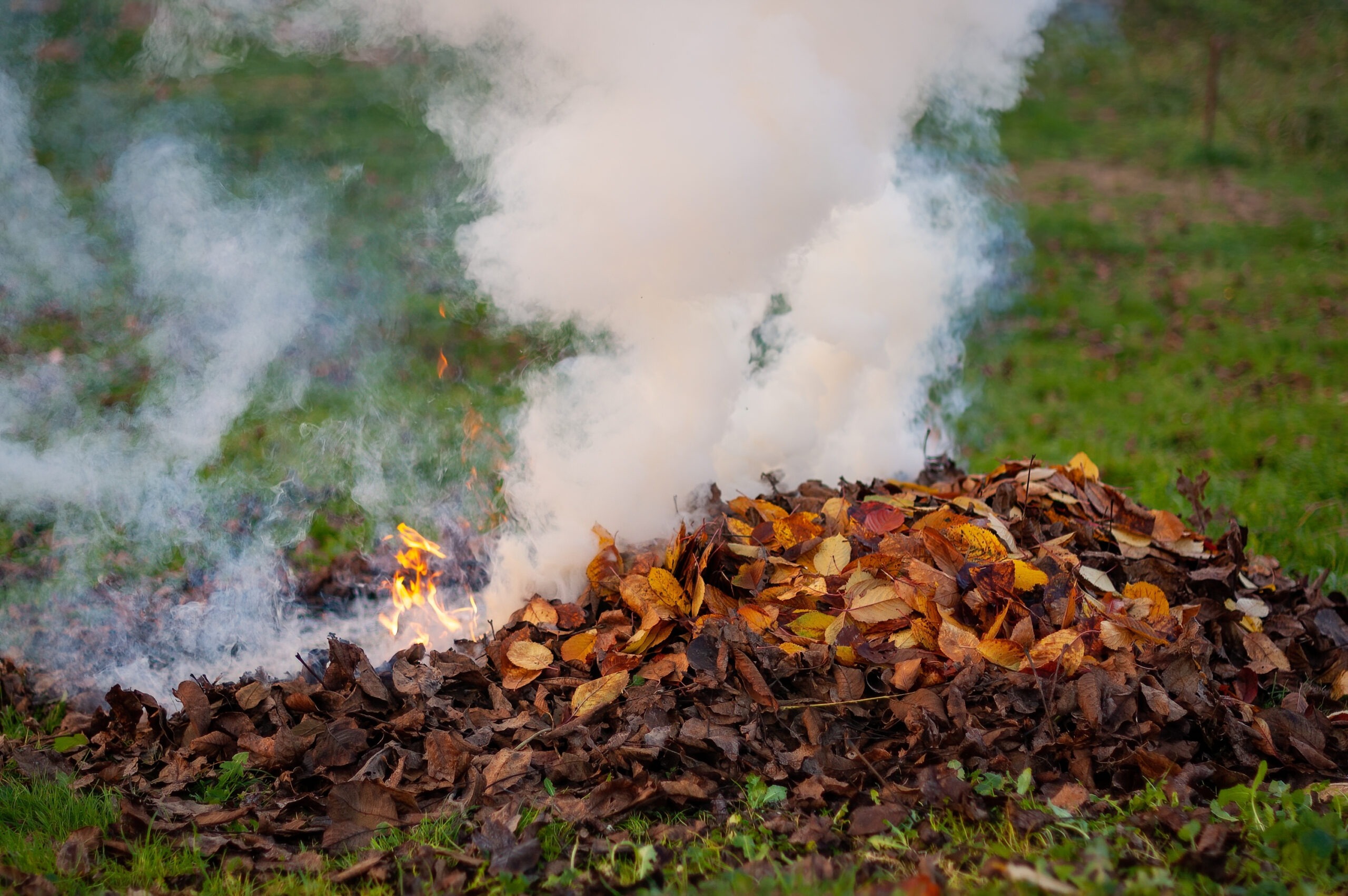
When smells become anti-social behaviour: What you can do about obnoxious odours
Introduction
Anti-social behaviour (ASB) can come in many forms: noise nuisance, intimidation, animal-related nuisance. However, one form that is often overlooked is persistent and intrusive smells. Obnoxious odours can have a serious impact on a person’s health and well-being. Like other forms of ASB, obnoxious smells can also disrupt sleep, increase anxiety and create a feeling of being trapped in your own home.
In many cases, these smells stem from fumes, such as cannabis smoke or domestic burning, which can pose additional health risks, including triggering asthma and other respiratory conditions. It is important to understand that unreasonable and ongoing odours can amount to anti-social behaviour. So, this blog will provide some insight and advice regarding obnoxious odours and what you can do about it.
When does smell become anti-social behaviour?
Going back to basics, the definition for anti-social behaviour as seen in the ASB, Crime and Policing Act 2014 is:
“Behaviour by a person which causes, or is likely to cause, harassment, alarm or distress to persons not of the same household as the person.”
So, when considering obnoxious smells, we need to consider the following:
- Frequency – Is the smell occurring regularly?
- Duration – How long have you been experiencing this smell?
- Intensity – Is the smell entering your home? Is it overpowering?
- Impact – Consider impacts on your health, sleep, family.
It’s important to note that there is a distinction between general living smells and smells that amount to anti-social behaviour.
General living smells may include:
- Cooking smells
- Occasional cigarette smoke
- Cleaning product or DIY fumes
These smells are often short-lived, incidental and infrequent.
Whereas invasive smells can include things like:
- Cannabis smoke
- Animal waste odours
- Frequent burning of materials
These smells are often persistent, prolonged and intense.
Cannabis fumes – why this can be complex
Cannabis fumes and enforcing these smells can be a complex topic in policing due to the fact that although recreational use of cannabis is illegal, some individuals have legally prescribed medicinal cannabis.
However – it’s important to know that smoking cannabis is illegal, even where an individual has a prescription. Cannabis can be prescribed to vape but would not be prescribed to smoke.
In practice, it can be difficult for practitioners to prove that someone has been smoking their prescribed cannabis as opposed to vaping it. This may require careful gathering of information, and in some cases, specialist input. Practitioners should communicate with you to explain what evidence may be needed and how they intend to address the situation.
If you’re struggling with anti-social behaviour, find advice on different types of ASB on our Victim’s Hub.
What does the legislation say?
ASB, Crime and Policing Act 2014
As we mentioned above, the Anti-social behaviour, Crime and Policing Act 2014 provides a definition of ASB to work by. This legislation details tools and powers that professionals can use to address ASB such as obnoxious smells, for example:
- Community Protection Warning (CPW) – This tool can be used to formally warn an individual that their behaviour is causing harm and sets out what needs to change. This tool gives the individual an opportunity to alter their behaviour before stronger enforcement action is taken.
- Community Protection Notice (CPN) – This tool follows the breach of a CPW – it is a legal notice which sets out the behaviour that needs to change. If the behaviour continues, this is a criminal offence and can result in a fixed penalty notice, prosecution and/or further enforcement action.
- Civil Injunction – This is also a legal tool and sets out the prohibited behaviour (e.g. smoking cannabis inside the property), imposes ‘positive requirements’ (e.g. engaging with support services) and includes the power of arrest in certain circumstances.
Environmental Protection Act 1990
Under the Environmental Protection Act 1990, obnoxious smells can come under ‘statutory nuisance’.
Under part 3 of the Act, local authorities have a legal duty to investigate complaints about issues that may amount to statutory nuisance e.g. smoke, fumes or gases. A smell may be considered a statutory nuisance if it:
- Unreasonably and substantially interferes with the use or enjoyment of a home, or
- Is prejudicial to health (i.e. likely to cause or contribute to illness)
Ultimately, Environmental Health Officers will consider different factors relating to the smell such as frequency, duration and intensity.
If the smell does amount to statutory nuisance, the individual should be served an Abatement Notice. This notice requires the person to stop or limit the activity and take steps to prevent the fumes from escaping. Failure to comply is a criminal offence and can lead to prosecution and fines.
Tenancy agreements
If you, or the individual responsible for the smell is a housing association or council tenant, tenancy conditions usually prohibit behaviour which causes nuisance or annoyance to other households. Therefore, landlords can take tenancy enforcement actions to address obnoxious smells produced by a tenant.
What can you do to address obnoxious smells?
In order to ensure local agencies are aware of the issue and to address the situation, you can consider the following:
When recording an incident of obnoxious smell, you should make a note of the date, time, duration, impact (mental and/or physical), any photos if appropriate (e.g. smoke entering window).
Feel free to use our diary sheet template for reference.
Obnoxious smells are usually addressed by your local Environmental Health Team. However, you should also report any obnoxious smells to your housing provider. If you believe the smell is a result of illegal drug use (including Class B use e.g. cannabis), you should also report this to police (non-emergency unless there is an immediate risk).
If you have repeatedly reported an obnoxious smell but feel no effective action has taken place, you may meet the threshold for an ASB Case Review.
An ASB Case Review is a useful multi-agency approach to an unresolved ASB case. You can find out more about how to access an ASB Case Review here.
Understandably, if you are experiencing regular obnoxious smells/fumes, you may worry about the impact this could have on your health. We recommend you speak to your GP if you are concerned about your health.
Likewise, if your mental health is being impacted, you should seek advice from your GP and local support services.
Other coping strategies such as ventilation and air purifiers (including carbon filters) may provide some mitigation until a full solution can be reached.
Conclusion
At the end of the day, you deserve to enjoy your own home. So, if you do find that you are being impacted by obnoxious smells, make sure to report this sooner rather than later to build a stronger case and ensure local agencies are aware of, and can address the issue.
Pictures from www.freepik.com

Anti-social behaviour in 2026: What can we expect this year?
Introduction
2025 saw the introduction of multiple pieces of legislation into Parliament. Whilst it is unclear about whether these laws will be passed during 2026, we feel it important to keep you updated on the progression of these bills and what their introduction could mean for you. We also want to empower victims to report anti-social behaviour (ASB) and exercise their rights when their reports are mishandled by local agencies.
Crime and Policing Bill
If the Crime and Policing Bill makes its way through all the stages of the parliamentary process this year, we could see its roll out of new and extended powers. This could include a trialling period for Respect Orders, which may take place in hotspot areas across the country.
What does this mean for victims?
When this law is introduced, victims can expect that persistent perpetrators of ASB will be served a Respect Order. You can find more on Respect Orders and what they are here.
Likewise, the introduction of the Crime and Policing Bill could see greater involvement of housing providers in tackling ASB given that this bill will provide them with greater powers e.g. ability to seek housing-related injunctions, extended closure powers. If housing providers embrace these new powers, more victims may view their housing providers as viable avenues for support, improving trust.
Victim and Courts Bill
This bill was introduced to Parliament in May 2025.
Once passed, this bill will strengthen the Victims’ Commissioner’s powers. The Victims Commissioner will continue to act as a formal independent body but will be able to investigate and scrutinise individual cases, challenge failures by local agencies, and exert pressure for better responses.
Sentencing Bill
For many ASB victims, the Sentencing Bill might feel distant or irrelevant, especially when they struggle to get agencies to take their reports seriously in the first place – long before a case ever reaches court or sentencing. Nonetheless, for those cases that do reach court proceedings, this Bill is a significant development in tackling ASB and could have a big impact.
The Sentencing Bill will mean:
- Short sentences (under 12 months) would no longer automatically result in time in prison; instead, the offender could be sentenced to community-based punishments (e.g. unpaid work, curfews etc).
- Courts may suspend sentences up to 3 years depending on circumstances.
- Courts will have more flexibility to impose non-custodial restrictions e.g. injunctions.
What does this mean for victims?
Importantly, this Bill makes victim protection a statutory focus, explicitly advising to consider victim impact. This Bill should also provide courts with a broader ‘toolbox’ – meaning sanctions could be tailored to the offence and risk, better protecting victims and communities.
However, from our own conversations with victims, we understand and appreciate that some victims may initially feel that the perpetrator has ‘gotten away with it’ if they avoid a custodial sentence. We hope that community-based sanctions and monitoring will prevent reoffending and give victims a sense of stability and peace.
Updates to local processes for the ASB Case Review
Since the updates to the statutory guidance on ASB Case Reviews in 2025, we would hope to see local agencies renewing their local ASB Case Review processes in line with this guidance.
What can victims do?
One of the best ways to ensure ASB is addressed effectively is to ensure that you are keeping a consistent and detailed log of incidents and evidence which can help agencies and courts to decide on appropriate action to take.
You can find some tips for evidence collection here.
Whether you have/are a victim of anti-social behaviour or not, you can also stay aware of local community safety meetings which are a great opportunity to have your voice heard by local agencies regarding your concerns.
Conclusion
We remain optimistic about policy developments expected throughout 2026. We will continue to monitor their impact closely and listen to the experiences of both victims and practitioners, using this insight to shape and inform our future work.

Understanding anti-social behaviour during the Christmas season
Introduction
As is the case every year, Christmas is fast approaching. Whilst many of us look forward to the celebrations and time with loved ones, it’s important to remember that not everyone feels this sense of excitement. For some people in our communities, Christmas brings increased worry due to the potential risk of anti-social behaviour (ASB).
In this blog, we will explore the types of ASB which may be more commonly seen at this time of year and explore the reasons behind these seasonal patterns. We’ll also share practical steps that victims and communities can take to stay safe during the holidays.
What types of ASB might increase at Christmas time?
Christmas time may bring about the following anti-social behaviour:
- Alcohol-related public disorder
- Noise nuisance e.g. from neighbour parties
- Retail related ASB e.g. abuse towards shopworkers
- Transport related ASB e.g. rowdy behaviour, vandalism, harassment of passengers
- ASB perpetrated by youths on Christmas break e.g. loitering and intimidation (even if unintentional)
Why are these behaviours seen at Christmas?
There are multiple reasons why we might see these types of behaviours at Christmas:
- More people are out in public places – you only need to look to events such as Christmas Markets taking place across the country to see how the festive period draws people into public places in droves. This increase in traffic grants more opportunities for friction to occur, especially when alcohol is involved, which brings us to our next point…
2. Higher alcohol consumption – Drinkaware found that 64% of UK drinkers intended to drink more over Christmas in 2024 than they usually did throughout the year. Research shows that alcohol consumption is linked to increased risk of anti-social behaviour perpetration. Naturally, the festive period may therefore hold risk of ASB taking place due to increased alcohol consumption.
3. Social/mental health stressors – The Christmas period can bring increased stress, from financial strain to relationship difficulties. Coupled with the reduced hours/closure of some support services over this period, tensions may rise. This could lead to increased risk of domestic-related anti-social behaviour like shouting and arguing.
What are local agencies doing to prevent ASB and protect communities?
Over the years we have seen local agencies like police forces design specific Christmas ASB/Crime prevention plans to protect communities during this period.
For example, this year, Greater Manchester Police (GMP) have launched Operation North Star which is in line with the government’s ‘Winter of Action’ plan, which is similar to their recent Safer Streets Initiative.
GMP stated:
“We’re backing our frontline officers and partner agencies to be visible and proactive – preventing anti-social behaviour and crime and making our neighbourhoods places where people feel confident walking home, enjoying time with family and friends, and shopping locally.”
What is the ‘Winter of Action’ plan?
Following the Safer Streets Summer Initiative, the government has developed a similar winter plan in hopes of “keeping the momentum going and to tackle the unique challenges of the festive season”.
This will take place between 1st December 2025 and 31st January 2026.
The key themes at the centre of this initiative include:
- Retail crime
- Street crime and anti-social behaviour
- Night-time economy safety and violence against women and girls
What can we do to keep ourselves safe this Christmas?
We understand that those most vulnerable in our communities may be concerned by the risk of ASB at Christmas time. We have compiled a list of ways to keep yourself safe this Christmas, so that everyone can enjoy the festive season:
- Stay aware in busy public places – Simply being aware of your surroundings whilst in crowded areas can help you to avoid potential ASB.
- Plan safe travel routes – make sure to stick to well-lit areas and travel with others if possible. This will reduce your exposure to ASB hotspots which are likely to be poorly lit streets or late-night transport.
- Manage alcohol consumption – as we’ve discussed, alcohol can fuel a lot of Christmas time ASB. By managing your own limits, drinking water between alcoholic drinks and looking out for friends can reduce the risk of getting caught up in disorderly situations.
- Report ASB ASAP so local agencies can respond before behaviour escalates – If you see or experience ASB, make sure to:
- Call 101 for non-emergencies
- Dial 999 if you feel threatened or in danger
- Report to local agencies like your housing provider and council
- Be considerate of others – even small gestures can help to prevent tensions from growing into ASB:
- Keep music at a reasonable level
- Let neighbours know if you are hosting a party or friends
- Manage parking considerably
Visit CrimeStoppers’ website for more useful tips for staying safe when out at Christmas.
Conclusion
Everybody deserves to enjoy the Christmas season. While some level of anti-social behaviour is inevitable, taking responsibility for our own actions and supporting one another as a community can help prevent issues from escalating. By working together, we can ensure the holidays remain safe and enjoyable for all.

Longer nights and anti-social behaviour
Introduction
Every year after the summer solstice in June, the nights start to get longer and the days shorter.
This natural and ancient cycle brings some beautiful sights, but it also has its downsides – many people feel more afraid of crime and anti-social behaviour during the darker months.
Table of contents
Nighttime and ASB
In some parts of the country, local councils have recently decided to turn off streetlights in towns and villages after 11pm to save electricity.
Local residents have raised complaints to their councils about this, citing the absence of light as creating an atmosphere where criminal activity is more likely to occur and correspondingly, residents feel more likely to become victims of these crimes or anti-social incidents.
It’s true that most violent incidents linked to the nighttime economy happen on weekends, especially between 10pm and 6am.
These hours, often called “nighttime economy hours,” can involve large crowds in areas with bars, pubs, and nightclubs, where alcohol and sometimes drugs play a role.
Take a look at the Local Government Ombudsman’s report on ‘Approaches to managing the nighttime economy’ for more info.
The lack of lighting not only makes the area feel more intimidating but also creates opportunities for offenders to hide and target unsuspecting victims. Situations like this highlight the vital need for well-planned and effective lighting in urban areas, especially where pubs, clubs, and a busy nighttime economy are central features.
This also shows the importance of collaboration between the planning sectors within local authorities, law enforcement and investigation from the police and local business improvement groups ensuring trade and commerce provide as safe a platform for their customers as possible.
The impact
There are very similar ways in which victims of anti-social behaviour and crime can feel the impact of reduced visibility/lighting during late hours.
Perpetrators can also be affected by this but of course in a different way.
When lighting is poor, victims feel more vulnerable because they cannot easily identify who might be responsible for the ASB, and investigators such as the police or local authorities may also struggle to gather clear CCTV evidence. At the same time, perpetrators feel more confident and comfortable taking advantage of these conditions.
However, there are now numerous excellent CCTV units for commercial and private use that can provide high quality imagery for just such occasions, throughout a 24-hour period. This measure together with adequate security or street lighting can provide a deterrent and therefore a source of comfort for the victim.
Rural vs suburban
It is often perceived that people who live in more rural areas feel more at ease from incidents of crime and ASB. However, in a think tank event at Lincoln in 2022 various delegates actually flipped this interpretation and cited that despite large gatherings of people and numerous drinking establishments being less common if not non-existent in villages, the very thought of an incident occurring was easily as stressful and in fact, to some (particularly those with vulnerabilities) was actually even more concerning.
The reason for this was mainly to do with geography, and the fact that any emergency response would in all probability take more time to reach the victim or to potentially apprehend the offender in adequate time. This research was revealed during the knife crime initiative called Think Sharp in Lincolnshire.
Transversely, the higher number of incidents per capita in towns and cities made this a source for concern for residents in this demographic. Both sets of people felt that the impact of it occurring at nighttime further exacerbated the impact and fear.
Conclusion
So, we can see that with adequate design and collaborative considered planning, the impact of nighttime reduced visibility can be mitigated to some degree and can aid detection as well as reducing potentially harmful incidents to help restore/maintain public trust and confidence.


Supporting the most at risk: Vulnerability and anti-social behaviour
Introduction
Vulnerability is one of the most significant risk factors in both anti-social behaviour (ASB) and crime.
In truly understanding those in our community that have vulnerabilities, how and why they experience anti-social behaviour and how much it adversely impacts on them, we can start to address the level of risk. When we understand this, we can better manage the risks they face—risks that can affect not only the individual, but the wider community and the professionals responding to these issues.
Incidents involving vulnerable people often include both ASB and criminal behaviour. These cases are usually complex and drawn out, with ASB often being the starting point and escalating over time into more serious crimes. This pattern is not often recognised and so each thematic/incident, is dealt with in isolation. As we have seen repeatedly over the decades, failure to recognise this leads to a perfect storm for incidents where serious harm, suicide or murder can tragically follow.
Over the years, cuts to public services have made it much harder to protect vulnerable people and respond effectively. This reduction in resources has made delivering this vital part of community safety far more difficult than it should be.
What is vulnerability?
The official definition is “the quality or state of being exposed to the possibility of being attacked or harmed, either physically or emotionally.”
In our community, we often think we can pigeonhole the vulnerabilities into categories such as the following:
-
- The elderly
- Those with debilitating illness or physical / mental health conditions
- Ethnicity
- Religion
- Unemployment
- Those who are isolated geographically or otherwise/ live on their own
- Those with young dependents
- Financial insecurity
- Sexual orientation
- Low educational attainment
- Those with addictions to drugs, alcohol and so on
- Victims of domestic violence
- Those whose first language is not English
- Those who have suffered adverse child experiences (ACE)
There are many more of course.
The truth is that anyone can develop vulnerability. Often, we can become vulnerable when we experience trauma, so in the case of ASB victims, this can occur at any time as we all have different capabilities to help us cope with harm. Generally speaking, the more we experience a traumatic event, the more likely we are to develop or harbour vulnerable attributes.
People often have more than one type of vulnerability, which can make everyday life challenging—even before they face issues like crime or anti-social behaviour.
In reality, not only are they more likely to be targeted by an offender, but they are also more likely to suffer a greater impact because of their vulnerabilities. It is also a very valid point that both offender and victim may have at least one of these factors as part of their profile.
Someone without these vulnerabilities is likely to be much less affected, both in how long the impact lasts and how serious it is.
This so-called impact ripple expands outwards from the victim, perpetrator and families to the wider community and also impacts on those engaged in dealing with the cases as they occur.
The impact of detrimental experience
As mentioned above, when someone is a victim of either crime or ASB, they can experience trauma. This can go on to cause problems; emotionally, mentally and physically.
It of course follows that those with pre-existing vulnerabilities, can suffer a greater serious, lasting effects from anti-social behaviour. This grossly affects their everyday lives and makes them progressively more likely to be targeted (perpetrators targeting the vulnerable sometimes ‘enjoy’ the repeated targeting of a particular person who may react adversely towards the offender as they may not be able to simply ignore or ‘brush off’ the incidents, which can become more frequent or severe over time).
Dr. Eric Berne wrote of the bent penny effect which is rather appropriate as a comparison in these cases to demonstrate the impact of ongoing persistent targeting of vulnerable people.
In ordinary circumstances, those without pre-existing vulnerabilities, if they are targeted with ASB are much more likely to simply deal with the (hypothetically) daily incidents as a matter of fact, and report them to the police, council and so on, then carry on with their daily lives.
The impact on them, in this case is comparatively lower.
Using the analogy of each incident generating a penny, this person would simply place each penny on top of another, and life would seem to carry on as normal.
However, using the same approach, the vulnerable person cannot deal with the incident in the same way and instead of generating a flat penny, the subsequent incidents to them are represented by a bent penny, since they are more difficult to process.
This also means that as the incidents follow, the stack of pennies becomes increasingly unwieldy and soon collapses with obvious consequences for the victim.
Other impacts
It’s understandable that some vulnerable victims choose not to report what’s happened to them. This can be because they fear retaliation or feel embarrassed, but it can also be due to communication difficulties or worry that they won’t be taken seriously like other victims.
This means that the vulnerable person may choose to suffer in silence rather than draw attention to themselves. Of course, this can and often does make the situation worse as the perpetrator will feel they have free rein to persist in targeting the person and often this will also become increasingly severe in its nature.
Coupled with organisational dilemmas such as a lack of cohesive working relationships with partners, communication issues and lack of resources, it is clear to see that if left unchecked, the situation could spin out of control.
Potential remedies
If our collective focus is truly on reducing or removing threat, risk and harm to our community, then the budgetary priority should be on protecting those that need help the most.
Failure to do this can lead to the most terrible of circumstances and from an organisational point of view, this also presents a clear and present reputational danger, reducing public trust and confidence in an organisation’s ability to do the job.
It is primarily for this reason, coupled with moral duty, that we need to focus on those who need us most.
To design a system for better awareness of our communities most vulnerable people, we first have to become aware of them.
A positive step to increasing awareness would be through engagement of the key groups we feel are most likely to be targeted. This can be through:
-
- More opportunities to speak with community police and Community Support Officers e.g. Cuppa with a Coppa events.
- Engaging in forums, with key partnerships (NHS etc), in community groups. Linking in with community hubs which actively seek out those hard-to-reach groups could be useful.
- Placing more emphasis and training for support agency workers (including those who have any kind of interaction with vulnerable people) on safeguarding and providing support or signposting to appropriate services.
What we should seek to do is close the gaps that often lead to a vulnerable person being targeted and to ensure the support needed is there with a heightened priority so that the service provided by any agency is of an enhanced harm centred approach.
Learning from the past
In my nearly 40 years of working with community challenges, whenever something has gone badly wrong and people have been harmed, an internal or public enquiry usually follows. In each and every case, the organisation involved promises to learn from the mistakes that led to the incident and assures both the enquiry team and the public that things will change to keep people safer.
However, it is abundantly clear that despite these assurances, the problems, the harm, the murders, still keep occurring and so the two questions that need asking if we are to truly break the cycle are:
Why does this keep happening?
And
What can we do as a society, as organisations, as individuals to stop it and to truly provide for a safer community for everyone?
Risk management in ASB cases
Reducing the risk = reducing the harm.
How do we incorporate risk factors in ASB case management?
To some extent, this is discussed above but the simplest and potentially most effective way of doing this is to invest in networking with our most vulnerable people, getting to know them before they encounter such issues where they are targeted. Noting their risk factors and incorporating them into the tactical policing/community safety plan.
We need stronger connections with community partners and open, ongoing communication to ensure a joined-up, focused approach. This helps improve the care and support given to those most in need—people who are more likely to use services and be at risk of becoming victims.
By doing this, we are being pro-active in our planning, we are not merely reacting to the victim’s predicament when they have already been targeted. We are attempting to be ahead of the game. This could form a geographical outlay, a map of, for example, estates and individuals who are elderly and so on.
This improved approach shifts the focus from targeting offenders to identifying areas or individuals who are more likely to become victims—ideally before anything happens. It’s a proactive way of solving problems, similar to hotspot policing.
This approach should also be used for offenders who may have vulnerabilities too. By listening to their issues, understanding how it affects them, and connecting them to the right support, we can help prevent them from causing serious harm to those who are less able to cope.
Other positive outcomes from this approach could include:
-
- Reduced CSP involvement and officer time.
- An increase in public confidence and trust.
- An increase in community cohesion where so often a lack of this is a causal factor of issues arising in the first place.

The root causes of anti-social behaviour
Introduction
Over the past 2 years, Derek has stayed up until 3am in his second floor flat, playing his music loudly and banging on the floors. When his neighbour asked him to stop playing music so late, Derek became aggressive – telling his neighbour to ‘f*ck off and mind your own business’. On the weekends, Derek will meet his friends and hang out at a local bench, drink alcohol and shout at passersby. So, the question here is – why? Why does Derek cause anti-social behaviour?
By understanding why an individual perpetrates anti-social behaviour, we can target the root cause and prevent chronic and escalating behaviours.
When you fall and go to the doctors with a very sore leg – the doctor won’t immediately put your leg in a cast in the hopes it will just get better. They will do diagnostics – x-rays. Only then can they choose the most effective treatment and prevent further damage to your leg. The same can apply to anti-social behaviour.
We need to understand the root cause to prevent further damage to the victim/community.
This blog will discuss the causes behind anti-social behaviour. Why does an individual perpetrate anti-social behaviour? And how does this relate to positive requirements in legislation such as the upcoming Respect Orders.
We want to emphasise
By trying to understand the root causes of anti-social behaviour, we are by no means trying to excuse or defend the actions of perpetrators. The impact that victims and communities experience is not defendable or excusable. Our vision as a charity is to improve outcomes for victims of anti-social behaviour. By understanding the psychology behind anti-social behaviour, we hope to prevent chronic cases that can last for months or even years.
If you are struggling as a victim of anti-social behaviour, please reach out to victim support services or get in touch for advice.
What do we mean by ‘anti-social behaviour’?
We first need to get on the same page regarding what we are defining as anti-social behaviour for the purpose of this blog. Anti-social behaviour is defined in legislation as acting in a manner that either causes or is likely to cause “harassment, alarm and/or distress”. We will follow this same definition, therefore anti-social behaviour in this case can include anything from chronic noise nuisance to vandalism and anti-social vehicle use.
What does the research say?
In order to understand the causes of anti-social behaviour, we need to look at the evidence. What has been discovered when investigating anti-social behaviour?
Now – we can go all the way back to basics and start with genetics for a very deep dive into the factors influencing whether someone will go on to cause anti-social behaviour. But, for the purposes of this blog – we will discuss some of the causes that can be targeted by positive requirements.
In this blog we will only cover some of the more commonly cited causes, but this list is not exhaustive. You can read about other possible causes of anti-social behaviour in literature such as The Civil Justice Court’s 2020 report on ‘Anti-Social Behaviour and The Civil Courts‘.
It’s important to note that most, if not all, of the points we will discuss can run deeper – meaning that they are often underpinned by further internal difficulties. For example, an individual with a substance misuse issue may have that dependency due to underlying trauma.
Alcohol misuse
An analysis conducted by the UK Data Service in 2022 found that almost 1 in 10 people experienced alcohol-related ASB in the year prior.
Research has shown there are multiple ways in which alcohol can influence anti-social behaviour (Young, Sweeting & West, 2008). Alcohol can cause short-term disinhibition and aggression – leading to anti-social behaviour. However, long term misuse of alcohol can subsequently damage certain areas of the brain, leading to further dysregulation and increased risk of perpetrating anti-social behaviour/social disengagement.
Another link between anti-social behaviour and alcohol misuse is that individuals with a predisposition to perpetrate anti-social behaviour are more likely to use (and misuse) alcohol than those who are not predisposed (Young, Sweeting & West, 2008).
These are two opposing theories, but the clear need for treatment remains the same.
Alcohol Research UK have previously reported on alcohol-related anti-social behaviour and the impact this has on society. They highlighted the importance of using positive requirements as a way to address these challenges.
Positive requirements are conditions imposed by a court that the defendant must do, often to their benefit as well as the community e.g. engaging with support services, attending awareness courses. Each application for a community-based civil action must show that at the least, positive requirements have been considered.
The report recommends that alcohol and drugs services be trained on the powers in the 2014 ASB, Crime and Policing Act and how they can be used in relation to alcohol related ASB. Likewise, community safety staff, police and alcohol services commissioners should ensure that alcohol services can be, and are, involved in the process leading to a criminal behaviour order at the earliest possible point. Essentially, a partnership working approach should be adopted to optimise the chance at reducing future alcohol-related anti-social behaviour.
Mental health difficulties
Individuals with mental health difficulties are more likely to be victims and/or perpetrators of anti-social behaviour.
Naturally, there are individuals who experience learning disabilities and/or difficulties that may demonstrate anti-social behaviour. For example, they may struggle to regulate their emotions, leading to noise disturbances etc for neighbours. However, these cases often become damaging to neighbours when individuals are not provided appropriate housing and/or care to meet their complex needs.
We previously spoke to a victim who had to access an ASB Case Review due to a neighbour who had complex needs which were not being met. You can read about it here.
Shelter Cymru published their ‘Reframing anti-social behaviour’ report in 2023 which demonstrated the
“Lack of consideration of the links between ASB and the alleged perpetrators mental health or other presenting support needs”
Shelter Cymru found that in 2022, of the 30 possession order cases they worked with, almost 3 in 5 (59%) of these cases involved tenants with complex need such as mental health issues or substance misuse concerns.
“A common thread was that none were receiving adequate or timely support either for themselves or members of their family.” – Shelter Cymru
Understandably, mental health-related anti-social behaviour lends itself to a wider problem – a lack of timely and sufficient mental health support across England and Wales.
Inability/unwillingness to consider the impact of behaviour
As The Civil Justice Court report states, there is a wide spectrum of anti-social behaviour which can’t be readily linked to common underlying causes (e.g. mental health issues, substance misuse etc). For example, an individual may be causing high levels of noise nuisance and does not change their behaviours despite impacting their neighbours.
The reasons for this behaviour could lead us to research that shows a link between anti-social behaviour and an impairment in self-control, genetic predispositions or even parenting style in childhood (Tuvblad & Beaver, 2013). However, just because someone might be biologically predisposed to anti-social behaviour, does not mean that they lack complete control of their behaviour.
The Civil Justice Court report states that in these cases, a positive requirement can be ordered that requires the individual to attend a victim awareness course.
So now what?
So, why is it important to understand the underlying causes of anti-social behaviour? As a practitioner, you might be thinking – “all I need to know if that ASB is taking place, and I can use powers to stop it regardless of why it happened”.
But, putting a plaster on a broken leg won’t fix the problem. By optimising our use of tools and powers, namely utilising the positive requirement component, we can take aim at the root causes of ASB and reduce risk of re-occurrence.
By understanding root causes, we can effectively choose positive requirements that are more likely to have an impact on the perpetrator and their future behaviours.
So why are positive requirements not used more often?
Unfortunately, although we can see the importance of positive requirements for preventing long term anti-social behaviour, the Civil Justice Council (2020) found that positive requirements were not being used as intended.
The Civil Justice Court found that some of the reasons agencies provided for not including positive requirements were:
- Difficulty in gaining information about the proposed respondent (so as to enable identification of suitable assistance/treatment).
- The lack of providers of drug and alcohol abuse courses/treatment.
- Lack of mental health treatment/support facilities.
- The difficulty in getting a provider of drug, alcohol abuse or mental health support services to become engaged in the provision of a course of treatment/assistance which is compulsory and/or that specifically requires the provider to report to a third party (such as a court) on a failure to comply, thereby interrupting trust and client confidentiality.
Conclusion
In the pursuit of safer communities, we must remember the importance of trauma-informed approaches. When tackling anti-social behaviour at its root cause, we will come across individuals who have mental health difficulties, substance misuse issues, and other underlying trauma – both on the side of the victim and the perpetrator.
Let’s go back to Derek – it may be that Derek suffers from depression and anxiety. His symptoms keep him awake at night and he uses alcohol as a means to try and escape his symptoms. Does this excuse his behaviour? No. But we can use this information to put in place positive requirements which will hopefully aid as access to alcohol and mental health services which Derek would not have otherwise had.
As Shelter Cymru states in their report:
“Seeing ASB as a symptom of broader support needs is integral in the pursuit of a trauma-informed approach. Anti-social behaviour may actually be the result of a person’s coping mechanism or stress response and point to a wider issue related to unmet support needs.”


Breaking the silence: Addressing a better partnership approach when dealing with noise complaints
Introduction
As part of our noise nuisance blog series, we are collaborating with organisations and practitioners who tackle noise nuisance to bring together knowledge and expertise to share with our readers.
The blog below has been written and provided by Jim Nixon at RHE Global – the organisation behind The Noise App. We are grateful to work so closely with like-minded individuals and be able to empower victims and practitioners in tackling noise nuisance.
Noise nuisance is an issue that affects countless individuals, yet too often, those reporting excessive noise find themselves frustrated with the response they receive. Local authorities have a statutory duty to investigate noise complaints and determine whether they meet the legal threshold for statutory noise nuisance. However, in many cases, complaints do not meet this high bar, leaving reporters feeling unheard and the problem unresolved.
The Housing Ombudsman’s Spotlight on Noise report (2022) brought this issue to the forefront, highlighting gaps in the way noise complaints are managed and making several key recommendations for improvement. It is clear that a fresh approach is needed to support those affected by noise and to ensure local authorities and housing providers have the tools to respond effectively.
The challenge of statutory noise nuisance
Statutory noise nuisance is determined based on strict criteria. Environmental Health Officers (EHOs) assess factors such as duration, frequency, and the impact on the complainant’s health and wellbeing. The challenge is that many forms of noise—such as everyday household sounds, slamming doors, or noisy appliances—may be highly disruptive to those experiencing them but do not necessarily meet the statutory definition.
You can find more on general living noise nuisance in our blog here.
For many reporters, this creates a frustrating cycle: they complain, the case is investigated, but because the noise does not meet the threshold, no action is taken, and the case is closed. This leaves the reporter without a resolution, damaging trust in local services and often leading to repeated complaints or escalation to ombudsman services.
A wider approach: The ASB, Crime and Policing Act 2014
Where statutory nuisance does not apply, other legal avenues may provide a solution. The Anti-Social Behaviour, Crime and Policing Act 2014 offers a more flexible framework to address noise problems under civil law. Using this legislation, authorities can take action based on the balance of probabilities, a lower evidential threshold than that required for statutory nuisance cases. This means that in cases where repeated, unreasonable noise is affecting residents, tools such as Community Protection Notices (CPNs) or injunctions can be considered to tackle the issue effectively.
The role of The Noise App
Technology is also playing an increasingly important role in noise management. The Noise App enables reporters to submit real-time evidence of the noise they are experiencing, allowing investigating officers to assess complaints more efficiently. The app provides an accessible way for residents to record disturbances, while also helping authorities to gather evidence in a structured and manageable format.
For officers and housing providers, the app enhances case management by providing a clear record of incidents. This can support decision-making, whether through statutory nuisance assessments, ASB interventions, or alternative approaches such as mediation.
Housing management and noise issues
The Spotlight on Noise report also identified how housing management factors contribute to noise complaints. Poor insulation, thin walls, and structural issues in housing can make everyday sounds seem excessive. In such cases, enforcement action may not be the best response. Instead, good housing management policies can help to reduce complaints and improve satisfaction among tenants.
One of the report’s key recommendations was the introduction of a Neighbourhood Management Policy to proactively address noise-related housing issues. This could include measures such as property inspections, better insulation, improved communication between neighbours, and the use of tenancy agreements to set clear expectations around noise.
Moving forward
The handling of noise complaints must evolve to better meet the needs of residents. By combining statutory noise nuisance investigations with ASB legislation, effective housing management, and digital tools like the Noise App, we can create a more responsive and effective system.
Authorities and housing providers must also invest in training and policy development to ensure that complaints are dealt with proactively rather than reactively. A holistic approach will not only improve customer satisfaction but also reduce the number of unresolved cases and unnecessary escalations.
At a time when noise-related disputes are becoming more common, it is crucial that we break the cycle of poor service and frustration. With the right strategies in place, we can ensure that noise complaints are handled fairly, efficiently, and with the best possible outcomes for all involved.